
“Flex Your Way to Less Stress: The Intricate Dance of…
Hey there, my bendy and unbendable friends,
Hey there, my bendy and unbendable friends,
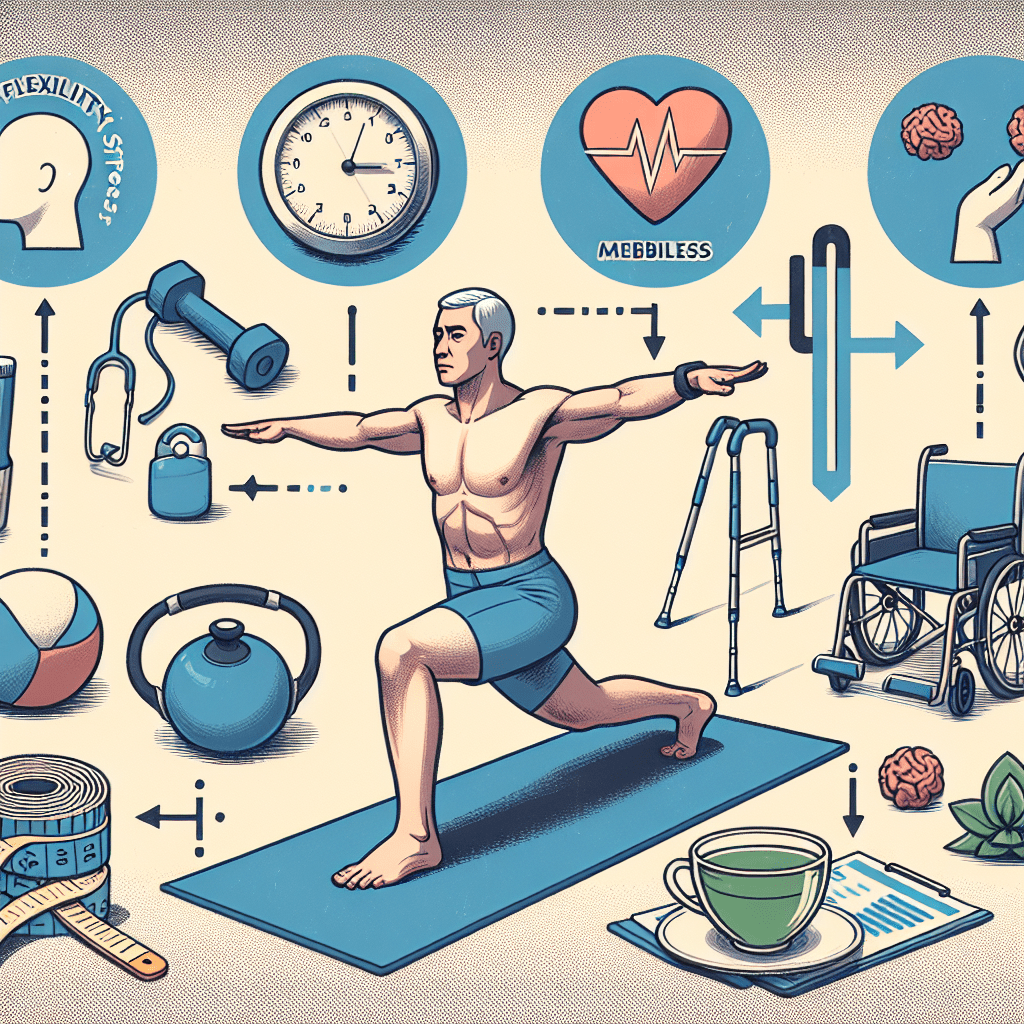
I’m going to be honest with you right from the start — we’re not about to embark on a journey to become the next yoga gurus or join a contortionist crew. Well, unless you’re already on that path, then by all means, Namaste, my friend! Today, our chat is about the fascinating world of flexibility and how it might just be your secret weapon against stress.
Now, who wouldn’t want a little less stress, right? Especially when all it might take is a little more of touching our toes and reaching for the stars. I’ll let you into a secret: it’s nothing to do with magic, but everything to do with science. Brace yourselves, we’re about to dive into it.
A recent study from the University of California, San Francisco, found a fascinating link between our flexibility and our stress levels. The science boffins found that those with better flexibility had lower levels of the stress hormone cortisol in their blood. Now, that’s a stress-buster we can all touch our toes to!
So, just to clarify, I’m not saying you need to become a human pretzel or start practicing your splits in the middle of the office. Just a few simple stretches daily can significantly improve your flexibility, and in turn, your hormonal balance and mental wellbeing.
Now, if you’re wondering what the connection between flexibility and stress has to do with a major Alzheimer’s project being in jeopardy, let me enlighten you. The project in question focuses on brain health and its connection with our physical health. A flexible body leads to a flexible mind, in theory. When our bodies are less stressed, our minds follow the lead, reducing the risk factors for degenerative diseases like Alzheimer’s. Simple, yet powerful, right?
Let’s not forget about mobility, which is the BFF of flexibility. The two are like two peas in a pod – where one goes, the other follows. Greater mobility can improve your quality of life, offering better balance, strength, and even reducing the risk of falls in older adults. Plus, who wouldn’t love to be able to actually reach that top shelf without needing a ladder?
So, here’s the million-dollar question: How can you track and improve your flexibility? Well, that’s exactly where our friendly companion SimpleFitness.ai comes in. It’s like a trusty sidekick, always ready, rain or shine, to help you monitor your sleep, nutrition, workouts, and of course, your flexibility progress.
Now, SimpleFitness.ai isn’t going to force you to do a downward-facing dog or insist on a daily warrior pose. Instead, it offers friendly reminders, encouraging nudges, and useful tips, all aimed towards helping you foster a healthier, happier life. It’s like having a cheerleader in your pocket, a companion who believes in your ability to touch your toes, reach for the stars, and reduce your stress levels while you’re at it.
So there you have it, folks. The story of how a little bend and stretch here and there can lead to lower stress levels and increased mobility. Remember, any movement is good movement. Every step (or stretch) counts, and it’s all about the journey, not the destination.
In fact, I have a challenge for you. Try to incorporate a bit of flexibility work into your daily routine for the next week. Just a few minutes each day, nothing too intense. You might just be surprised at how incredible you feel.
Visit SimpleFitness.ai to help you on your journey to more flexibility, less stress, and a healthier, happier you! Because after all, your health isn’t just about the big leaps, but also the small, bendy steps along the way.
Remember, it’s your journey. You can do this.
Happy stretching, my friends!




 My Easy to Follow Longevity Lifehacks
Leave a comment